What to Do After Selling Your Business in Singapore: The Seller's Checklist
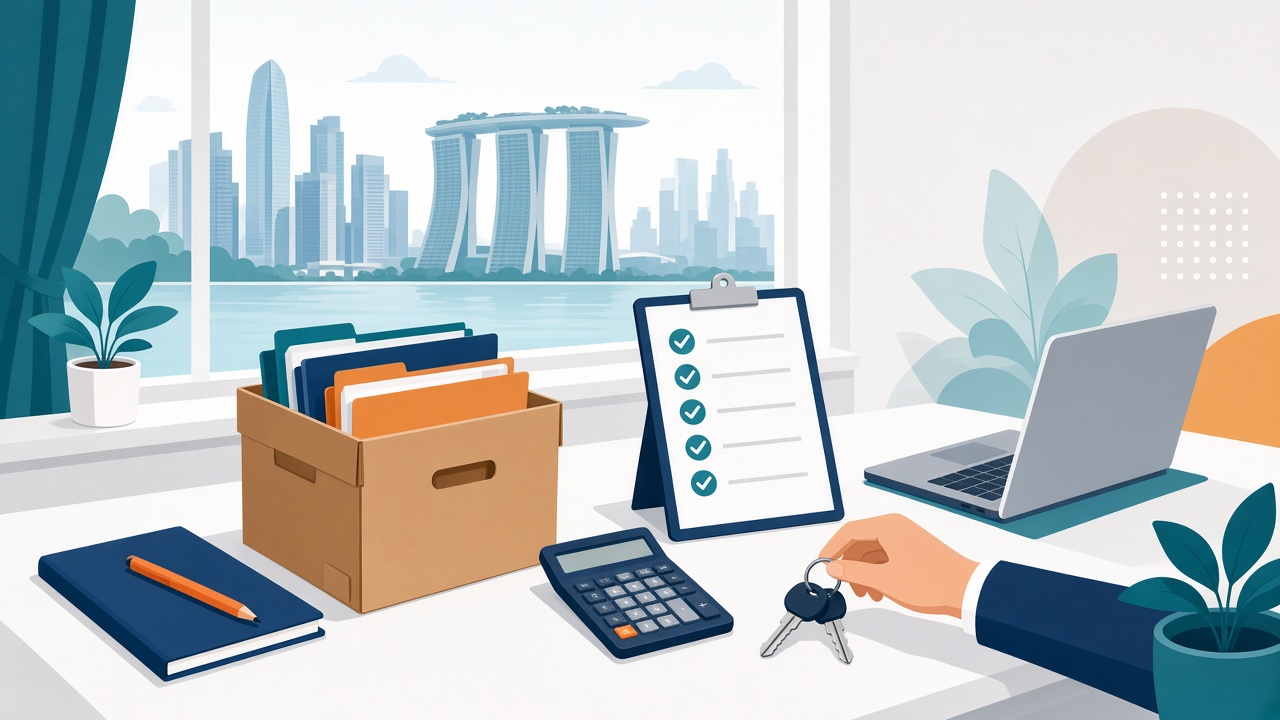
Short answer: after you sell your business in Singapore, the buyer runs the business but the old company or sole proprietorship is still yours to close properly. If you sold the business assets, cancel your GST registration within 30 days, file the final GST return (GST F8) and the last income tax returns, settle every tax and debt, then strike off the empty company with ACRA or cease the sole proprietorship on Bizfile. Keep the bank account open until IRAS matters are closed, and keep your records for at least 5 years. If you sold shares, most of this passes to the buyer.
This checklist is general information based on guidance from IRAS and ACRA, checked on 2 November 2026. It is not legal or tax advice. Your accountant or corporate secretary can confirm the exact steps for your company.
Does it matter whether you sold shares or the business?
Yes. In a share sale, the buyer takes over the company itself, with its GST registration, tax filings, bank accounts and contracts. Your wrap-up is personal: resign as a director, make sure the transfer is recorded with ACRA, get any personal guarantees released, and keep your copies of the deal documents. Our guide to selling a private limited company covers those steps.
In an asset sale, the buyer takes the business, equipment, stock and goodwill, but your company, or your sole proprietorship, stays with you. It holds the sale money and keeps its tax, GST and ACRA obligations until you close it, which is what this checklist covers. Our guide to asset sale vs share sale explains the difference.
When do you have to cancel your GST registration?
According to IRAS's page on cancelling GST registration, you must apply within 30 days when your business is transferred as a whole to another person, when your business has ceased, or when you have stopped making taxable supplies and do not intend to make any in future. You apply online at the myTax Portal, and IRAS says most applications are approved on the day.
Until the last day of registration, which is one day before the effective date of cancellation, you must keep charging GST and filing returns as normal. From the effective date, you must not charge or collect GST or issue tax invoices. The buyer handles its own GST registration; see our guide to GST in a business takeover.
What goes into the final GST return (GST F8)?
After cancellation, IRAS issues a final GST return, the GST F8, covering the period up to your last day of registration. You must file it and pay any GST due within one month from the end of that period, and clear any other outstanding returns.
Two items catch sellers out:
- Assets you still hold. You must account for GST on business assets held on the last day of registration, such as equipment, vehicles, unsold stock or non-residential property you claimed input tax on, if their total open market value is more than S$10,000. This does not apply if you transferred the whole business as a going concern to another GST-registered person.
- Sales that straddle the date. Goods delivered or services performed before cancellation, but invoiced or paid for afterwards, must be included in full.
Our guide on tax when you sell your business explains when a sale is treated this way.
Which income tax returns are still due?
For a company, IRAS says on its page for companies applying for strike off that Corporate Income Tax Returns (Form C-S, Form C-S (Lite) or Form C) must be filed up to the date the business ceased.
A sole proprietor or partner reports business income in their personal income tax return (Form B or B1), so the final period of the business, up to the date it stopped, goes into that return. Whether a gain on the sale itself is taxable depends on the facts, so check the seller tax guide above and ask your tax adviser.
How do you strike off the company after an asset sale?
ACRA's striking off guide says the company must have stopped trading, owe nothing to anyone including government agencies, own nothing, have no charges registered or legal cases pending, and have the agreement of all or most of its directors.
So the sale money and any remaining assets have to be dealt with first, and IRAS must be fully settled: all returns filed, assessments finalised, tax paid and GST cancelled. Otherwise IRAS will object, and if its objection is not resolved within 2 months you have to apply again.
You apply through Bizfile, and ACRA lists no fee for the application. If other directors must endorse it, they have 14 days or it lapses. For applications made on or after 20 October 2026, the process takes at least 2 months after ACRA approval: ACRA publishes a First Gazette notice, allows 60 days for objections, then publishes a Final Gazette notice, after which the company no longer exists. Applications made before 20 October 2026 take at least three months. If the company still has debts it cannot pay, striking off is not the route; our guide to selling a loss-making business covers winding up.
How do you close a sole proprietorship or partnership?
ACRA's guide to closing a sole proprietorship or partnership says to settle administrative matters first, such as remaining contracts, vehicle transfers and loans or grants linked to the business, and to cancel GST registration if applicable. Then file the cessation on Bizfile. ACRA lists no fee, and the closure is immediate and cannot be reversed. An expired registration must be renewed first. Our guide to selling a sole proprietorship covers the sale itself.
When can you close the company bank account?
Only after every tax matter is settled, because IRAS cannot pay a refund owed to the company to a director or shareholder instead; on dissolution it goes to the Insolvency Office. Download your tax letters from the myTax Portal before the company is struck off.
What records do you need to keep, and for how long?
IRAS requires GST records to be kept for at least 5 years from the date of each transaction, even if your GST registration is cancelled before the 5 years are up. Once a company is struck off, its books and papers must be kept for at least 5 years from dissolution, a duty that also falls on its former officers. Keep the signed sale agreement, completion documents and any disclosure letter too; warranty claims can come years later, as our guide to seller warranties and indemnities explains.
What else belongs on your post-sale checklist?
- Licences and permits that stayed in your name rather than moving to the buyer: cancel them with the agency that issued them.
- The lease. If you assigned it, get the landlord's written release so you are not still liable. See our guide to selling a business in rented premises.
- Bank loans and guarantees. Confirm in writing that facilities are repaid and personal guarantees released. See our guide to selling with a bank loan or personal guarantee.
- Staff who did not move to the buyer: pay final salaries and CPF contributions.
- Money still to come. Diarise earn-out targets and deferred payment dates. See our guide to earn-outs and deferred payments.
Our business handover guide covers the handover day itself, and the guide to selling a business in Singapore covers the whole journey.
Frequently asked questions
Do I need to cancel my GST registration after selling my business?
Yes, if you are GST-registered. IRAS says you must apply within 30 days when your business is transferred as a whole to another person, when it has ceased, or when you have stopped making taxable supplies and do not intend to make more. You apply online through the myTax Portal.
What is the final GST return (GST F8)?
It is the last GST return IRAS issues after your registration is cancelled. It covers the period up to the last day of registration and must be filed within one month after that period ends. It includes GST on business assets you still hold if their open market value is over S$10,000, unless the whole business went as a going concern to a GST-registered buyer.
Can I strike off my company straight after an asset sale?
Only once it meets ACRA's criteria: it has stopped trading, has no unpaid debts or government issues, no charges, no legal cases, and owns nothing and owes nothing. IRAS also expects every tax return filed up to the cessation date, all tax paid and GST cancelled first, or it will object.
How long does it take to strike off a company in Singapore?
For applications made on or after 20 October 2026, ACRA says the process takes at least 2 months after it approves the application. ACRA publishes a First Gazette notice, gives 60 days for objections, then publishes a Final Gazette notice. Applications made before 20 October 2026 take at least three months.
When should I close the company bank account?
Not until every tax matter is settled. IRAS warns that if the account is closed while a tax refund is owed, it cannot pay the refund to a director or shareholder. When the company is dissolved, the refund goes to the Insolvency Office, and shareholders may have to pay processing charges to claim it.
How long must I keep business records after selling?
IRAS requires GST records to be kept for at least 5 years from the date of each transaction, even if your GST registration is cancelled before then. After a company is struck off, its books and papers must be kept for at least 5 years from the date it was dissolved, and former officers share that duty.
What do I still need to do if I sold my shares rather than the business?
Much less. The company, with its GST registration and tax filings, stays with the buyer. Make sure your resignation as director and the share transfer are recorded with ACRA, that any personal guarantees you gave are released, and that you keep signed copies of the sale agreement and completion documents.
Still deciding whether to sell your business?
Knowing the finish line makes the sale itself easier to plan. SG Business Mart is a business-for-sale marketplace, not a broker: you list your business, interested buyers contact you directly, and you agree the price and terms with your own advisers. Listings are a one-time fee per listing, starting from S$49, as shown on our pricing page. Browse the businesses for sale in Singapore to see how other owners present their businesses.
When you are ready to find a buyer: list your business for sale on SG Business Mart.