The Business Handover Process in Singapore, Step by Step
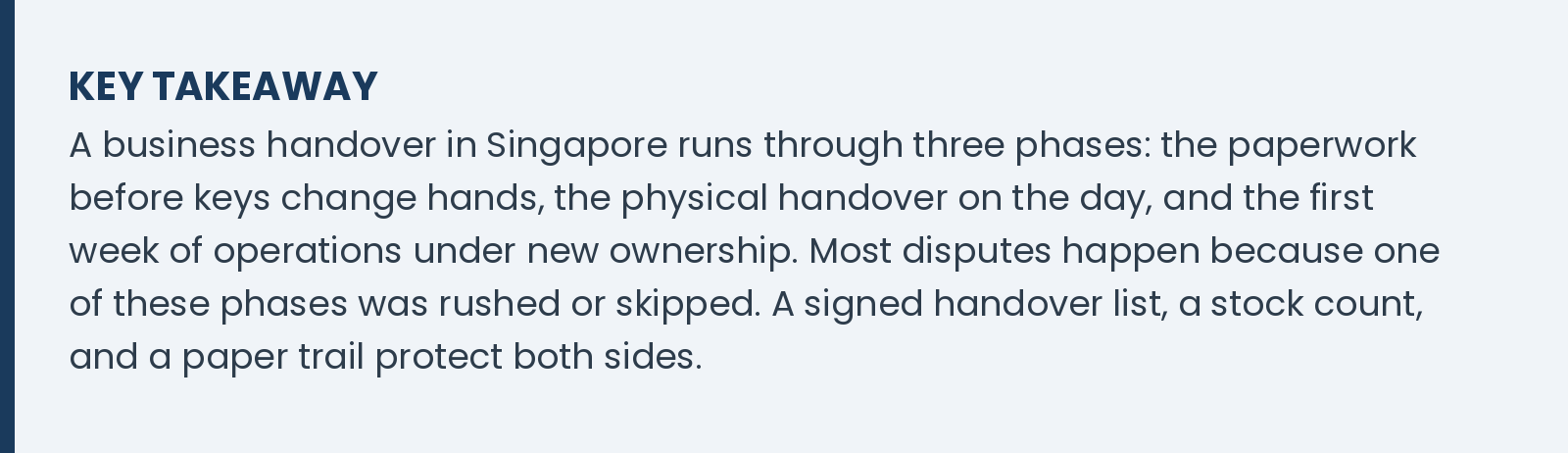
A business handover in Singapore typically takes two to four weeks from signed agreement to first day of trading, with the timeline set by landlord consent, licence applications, and the physical transfer of keys and stock. Most disputes happen because one side rushed the process or skipped a step. This guide walks through the three phases of a handover: the paperwork before keys change hands, the physical handover on the day, and the first week of operations under new ownership.
The handover is not the end of the deal. It is the start of everything that matters.
The timeline at a glance
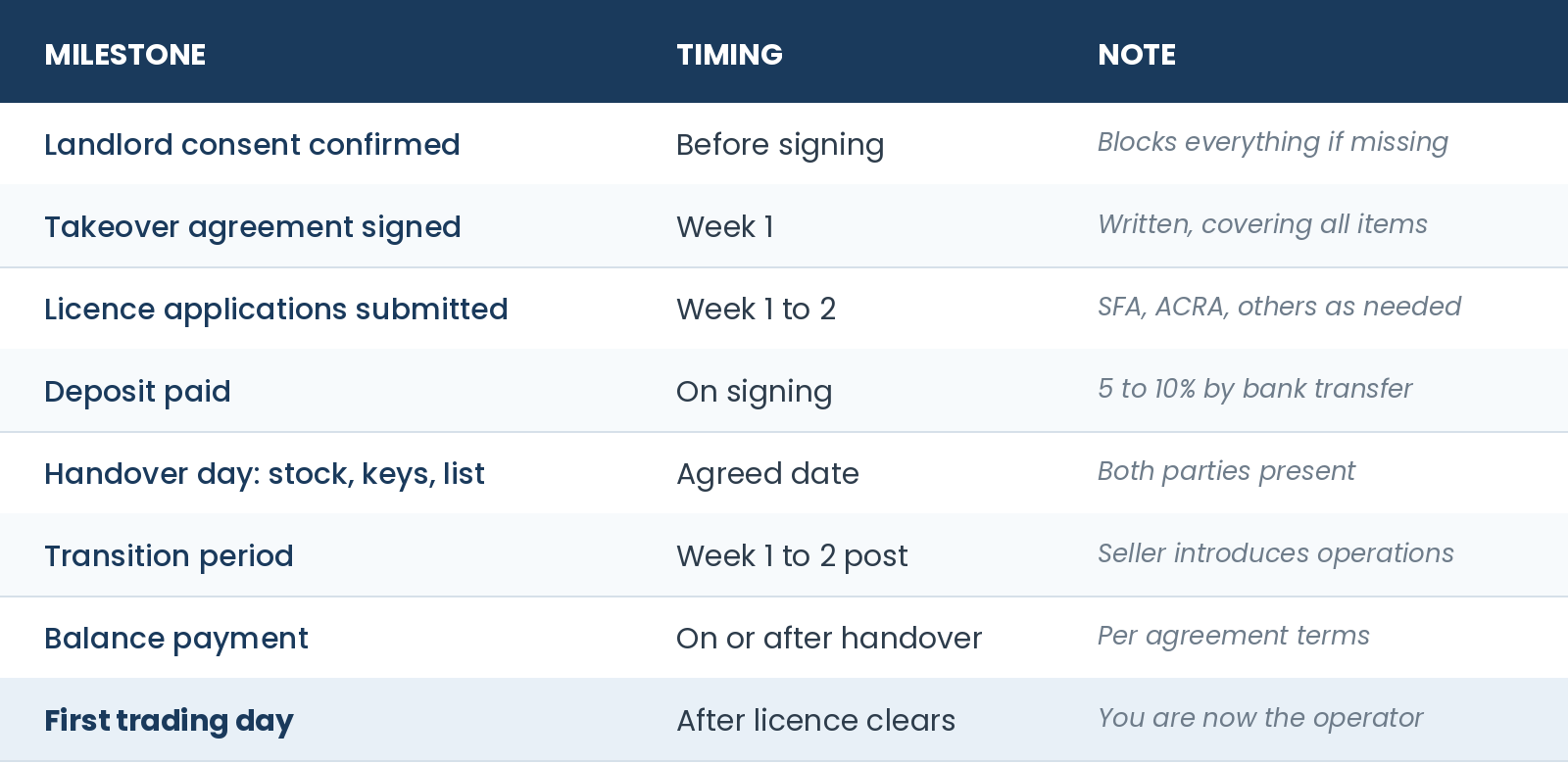
The milestones above apply to most small business takeovers in Singapore, whether F&B, retail, beauty, or services. The exact timing depends on how quickly the landlord responds and how long the relevant licence takes to clear.
Before handover: the paperwork phase
Confirm landlord consent in writing
Most commercial tenancies in Singapore require the landlord's or coffeeshop operator's written consent to assign the lease to the incoming tenant. A signed takeover agreement between buyer and seller means nothing if the landlord refuses. Get the consent letter before you pay a deposit, and make the deposit refundable if consent is not granted.
Sign the takeover agreement
The agreement should name both parties, list every item included in the takeover fee, state the payment terms and timeline, record the landlord's consent, and specify what happens if the deal falls through. Pay the deposit by bank transfer so there is a record. A 5 to 10% deposit is standard.
Submit licence applications
Licences do not transfer with the business. The incoming operator applies in their own name. For F&B businesses, this means a fresh SFA food shop or food stall licence through GoBusiness. For other business types, check whether ACRA registration, sector-specific permits, or other approvals are needed. Start these applications as early as the tenancy agreement allows, because the licence timeline controls when you can start trading.
For what a takeover fee typically includes and how to check whether it is fair, see our guide to business takeover fees in Singapore.
On handover day
Count the stock together
Stock is usually counted and paid for separately on the day, at cost price rather than retail. Walk the storeroom, the shelves, and the chillers together. Agree the count, agree the value, and sign it. A S$5,000 stock dispute is not worth the delay it causes if it could have been settled with a shared clipboard.
Collect every key, code, and login
Premises keys, back-door keys, roller-shutter keys, alarm codes, safe combinations, POS system logins, Wi-Fi credentials, utility account details, the waste-collection schedule, and the contact numbers for every regular supplier. Write them down during the handover while the seller is still present, not afterwards from memory.
Sign the handover list
A signed handover list protects both sides. It names every item included in the takeover fee, records the condition of the equipment, confirms the deposit amounts, and notes any items the seller is removing. If a dispute arises later about what was included or what state things were in, the signed list settles it. Without one, you have nothing to fall back on.
Photograph everything
Take dated photos of the premises, every piece of equipment, and the condition of surfaces, signage, and storage areas before you start trading. Timestamped photos are the cheapest evidence you can create, and the most useful when a disagreement surfaces three weeks later.
The payment sequence
How the money moves matters as much as how much. The standard sequence is a deposit of 5 to 10% on signing the agreement, tied to landlord consent. The balance is paid on handover day, once the lease assignment is signed and the landlord has acknowledged the incoming tenant. Stock is counted and paid for separately, also on the day.
Pay every amount by bank transfer so there is a dated record. If the seller asks for cash, insist on a signed receipt at minimum. A dispute over a S$30,000 payment made in cash with no record is a dispute you cannot win.
Tie the deposit to a clear refund clause. If the landlord refuses the assignment, the deposit comes back. If the buyer walks away after consent is granted, the seller keeps it. These terms should be in the agreement, not discussed for the first time when something goes wrong.
The first week under new ownership
Meet the staff
If employees are transferring with the business, meet each one individually in the first few days. Confirm that their terms are unchanged, answer their questions, and set expectations. A brief written confirmation that their employment continues on existing terms reduces anxiety and prevents misunderstandings.
Contact every supplier
Introduce yourself to every supplier the business depends on: ingredients, packaging, cleaning, gas, waste collection, linen, and any other regular service. Confirm whether the account transfers, whether credit terms carry over, and whether there are outstanding balances. Some suppliers extend credit based on their relationship with the outgoing owner, not the business itself, so expect to renegotiate.
Confirm delivery platform accounts
If the business has GrabFood, foodpanda, or other delivery listings, confirm with each platform whether the account can be transferred or whether you need to register fresh. A new account starts with zero reviews and zero history, which affects revenue in the first weeks. Transfer where possible.
Settle into the routine before you change it
Resist the urge to change everything on day one. Run the business as the previous owner did for at least a week. Observe how it works, where the pressure points are, and what the customers expect. Changes made from a position of understanding land better than changes made from a position of enthusiasm.
When you are ready to look at what is available, browse businesses for sale on SG Business Mart and compare opportunities. Every listing connects you directly with the owner, with no broker in between.

Frequently asked questions
How long does a business handover take in Singapore?
A straightforward handover can close in two to four weeks from signed agreement to first day of trading. SFA licence processing, landlord approval, and tenancy paperwork are the usual bottlenecks. Deals involving share purchases or regulatory approvals take longer.
What should be on the handover list?
Every item included in the takeover fee: equipment by name and condition, furniture, fixtures, any transferable deposits, keys, alarm codes, POS logins, supplier contacts, utility account details, and the licence numbers for any operating permits. Both parties sign the list on handover day.
Who pays for stock at handover?
Stock is usually counted and paid for separately on the day, at cost price rather than retail. Agree the counting method before handover to avoid disputes over a bill that arrives after the deal is signed.
Do I need landlord consent before handover?
Yes. Most commercial tenancies in Singapore require the landlord's written consent to assign the lease. A signed takeover agreement between buyer and seller is worthless if the landlord refuses. Confirm consent before paying any deposit.
Should the seller stay after handover?
A transition period of one to two weeks, where the seller works alongside you to introduce suppliers, show the daily routine, and handle customer questions about the change, is worth negotiating before you sign. It is much harder to arrange after the seller has moved on.
What happens if something is missing after handover?
A signed handover list is your evidence. If an item listed as included is missing or in worse condition than recorded, the list gives you grounds to pursue the seller. Without a signed list, disputes become word against word.

