Selling Your Business: What Happens to Stock, Receivables and Cash?
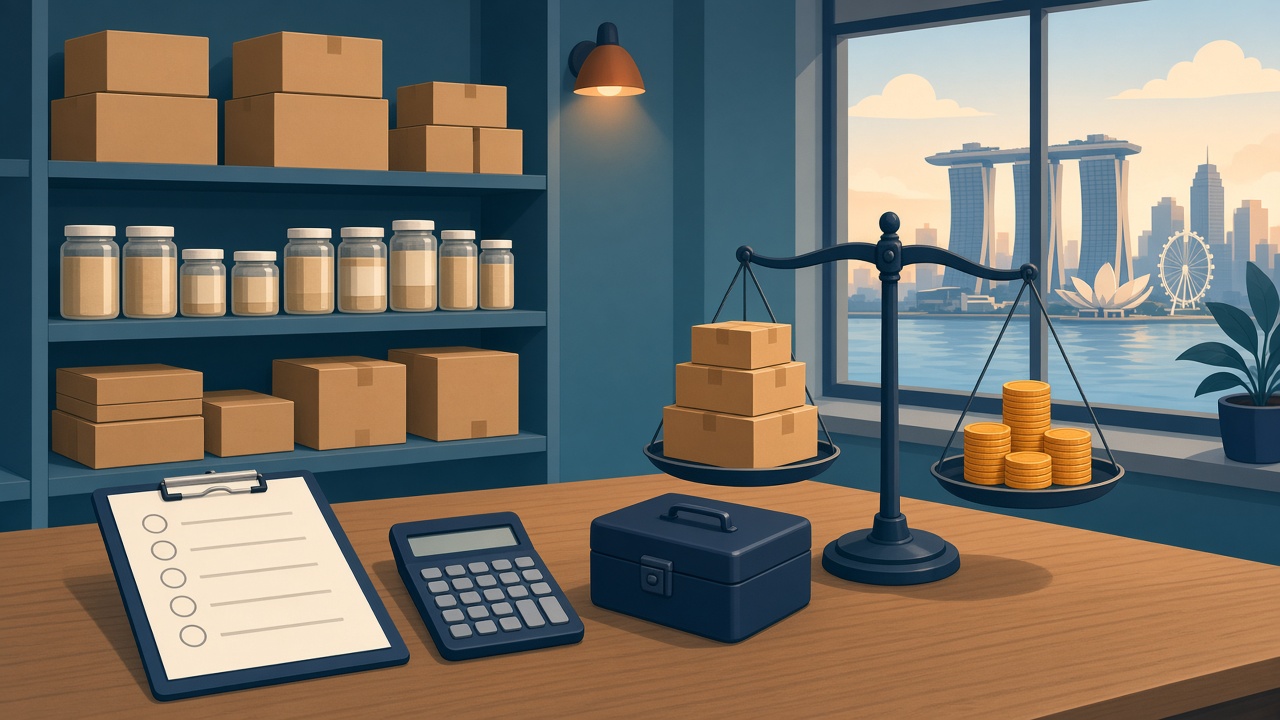
Short answer: stock, money owed by customers and cash are not automatically part of a business sale. The sale agreement decides. In a typical asset sale the seller keeps the cash and receivables and the buyer pays for stock counted on the completion date. In a share sale everything stays in the company, so the price is usually adjusted for the cash, debt and working capital left behind, either through completion accounts or a locked box. Agree the method before you sign, because it can change what you actually receive.
This guide is general information based on guidance from IRAS and the Income Tax Act on Singapore Statutes Online, checked on 30 October 2026. It is not legal or tax advice. Ask your accountant and lawyer to model the numbers for your own sale.
Why can the final price differ from the agreed price?
A buyer pricing your business usually assumes the business will come with a normal amount of stock to keep trading and a normal level of bills paid and money coming in. If you run the stock down, collect every debt and delay paying suppliers before completion, the business the buyer receives is worth less than the one they priced. Most sale agreements deal with this by adjusting the price for what is actually there on the day.
The adjustment can work in your favour too. Our guides on how much to sell a business for and business valuation explain how the headline figure is reached; this guide covers what happens between that figure and the money in your account.
Does the buyer pay extra for stock?
It depends on the deal. Two common approaches in small business sales are:
- Price plus stock at cost. The buyer pays an agreed price for the business, equipment and goodwill, plus the cost value of saleable stock counted at completion.
- Stock included in the price. The headline price assumes a normal level of stock, sometimes with a minimum value. If less is left on completion day, the price is reduced.
Whichever you use, agree how the stock-take will be done: who counts, on what date and time, which items are excluded (expired, damaged, slow-moving or obsolete stock), and how stock is valued, usually at cost price from supplier invoices rather than retail price. For F&B takeovers, our F&B takeover checklist covers the handover of perishables and equipment.
Who keeps the cash and the money customers owe?
This is where the difference between an asset sale and a share sale matters most.
In an asset sale, the buyer only takes the assets listed in the agreement. You normally keep the cash in your bank account, collect your own receivables and pay your own suppliers and debts.
In a share sale, the buyer buys the company, so its cash, receivables, payables and loans stay inside it. Our guide to selling a private limited company explains the share sale route. Because the company keeps everything, share sale prices often assume no surplus cash and no borrowings, then add the cash and deduct the debt actually in the company. If the company has a bank loan you guaranteed, also read our guide on selling with a bank loan or personal guarantee.
What is a working capital peg and how does it work?
Working capital is broadly the short-term money tied up in running the business: stock and receivables, minus what the business owes suppliers and other short-term creditors. A working capital peg is the normal level that both sides agree the business needs, usually worked out from an average over recent months so that seasonal swings do not distort it.
At completion, the actual working capital is compared with the peg. If it is higher, the buyer pays the difference; if it is lower, the price is reduced. As a simple illustration with made-up numbers: if the peg is S$50,000 and the business has S$42,000 of working capital on completion day, the price would drop by S$8,000. The agreement should define exactly which balance sheet items count, how they are measured and which accounting policies apply.
A peg set from a busy month can be higher than the business really needs, so check how it was calculated. See our guide on preparing your financials for a sale.
Locked box or completion accounts: which is better for a seller?
With completion accounts, the price is agreed in principle, and after completion one side prepares accounts as at the completion date. The price is then adjusted for actual cash, debt and working capital compared with what was assumed. This tracks the real position, but it takes time after completion and the two sides can disagree about the figures so agree a timetable and a way to resolve disputes, such as an independent accountant.
With a locked box, the price is fixed from a recent set of accounts at an agreed date, called the locked box date. From that date the business is run for the buyer's benefit, and you promise not to take value out, for example through dividends, bonuses or unusual payments to yourself, except for items listed as permitted. If value leaks out, you repay it. A locked box gives you price certainty and fewer arguments after completion, but it depends on reliable recent accounts.
Sellers with simple, up-to-date accounts often prefer a locked box; completion accounts can be fairer when accounts are older. Our guide on negotiating business sale terms covers how to trade these points against price and payment terms.
How are stock and the sale treated for GST and income tax?
For GST, IRAS explains on its page on transferring businesses that if a business is transferred as a going concern, the supply of the related assets can be treated as an excluded transaction, so GST is not charged on them. All the conditions must be met, including that the buyer takes over a business rather than just assets, carries on the same kind of business and is or immediately becomes GST-registered. If the conditions are not met, a GST-registered seller may need to charge GST. Our guide to GST in a business takeover has more detail.
For income tax, section 32 of the Income Tax Act 1947 sets the value of trading stock when a business is discontinued or transferred. If the stock is sold to someone who carries on or intends to carry on a business in Singapore and can deduct its cost, it is valued at the price received. Otherwise it is valued at what it would have fetched on the open market. So tell your accountant how stock is being priced. Our guide on tax when you sell a business covers the wider picture.
How can you prepare before you list?
- Keep stock records up to date and clear out expired or obsolete items so the count reflects saleable stock.
- Chase overdue receivables and write off debts that will not be paid, so buyers can trust the figures.
- Prepare monthly management accounts for at least the last year so a fair working capital level can be shown.
- State in your listing whether stock is included in the asking price or charged at cost on top. Our guide to writing a sale listing shows how to set this out clearly.
For a full timeline, see our 90-day sale preparation plan and the guide to selling a business in Singapore.
Frequently asked questions
Is stock included in the price when I sell my business?
Only if the agreement says so. Many asset sales quote a price for the business plus stock at cost, counted on the completion date. Others include a normal level of stock in the headline price. Write down which approach you are using so there is no argument at handover.
Who keeps the cash in the bank when a business is sold?
In an asset sale the seller normally keeps the cash, because the buyer is only buying the business and named assets. In a share sale the cash stays in the company, so it is usually reflected in the price, often by adding cash and deducting debt, or taken out before completion with proper approvals.
What is a working capital adjustment?
It is a price adjustment that compares the working capital actually left in the business at completion, such as stock and receivables minus payables, with an agreed normal level, often called the peg. If there is more than the peg the buyer pays extra; if there is less, the price goes down.
What is the difference between locked box and completion accounts?
With a locked box, the price is fixed from accounts at an earlier date and the seller promises not to take value out after that date. With completion accounts, the price is adjusted after completion using accounts drawn up at the completion date. Locked box gives price certainty; completion accounts track the real position.
What happens to money customers still owe me after the sale?
In a share sale the receivables stay with the company and belong to it. In an asset sale you can keep them and collect them yourself, or sell them to the buyer as part of the deal. Agree in writing who collects, how payments are passed on and what happens to bad debts.
Is GST charged on stock sold with my business?
Not if the sale qualifies as a transfer of a business as a going concern. IRAS says that supply of assets is an excluded transaction if all its conditions are met, including that the buyer carries on the same kind of business and is or becomes GST-registered. Otherwise GST may apply.
How is stock valued for tax when I sell my business?
Under section 32 of the Income Tax Act, stock sold to a buyer who carries on a business in Singapore and can deduct its cost is valued at the price received. Other stock on a discontinued or transferred business is valued at what it would fetch on the open market.
Ready to sell your business?
Buyers respond better when the asking price clearly says what is included. SG Business Mart is a business-for-sale marketplace, not a broker: you list the business, buyers contact you directly, and you agree the deal, including how stock and working capital are handled, with your own advisers. Listings are a one-time fee per listing, currently Basic S$49 for 30 days, Standard S$79 for 60 days and Premium S$99 for 180 days, as shown on our pricing page. Browse the businesses for sale in Singapore to see how other owners describe their stock and assets.
When you are ready to reach buyers: list your business for sale on SG Business Mart.