F&B Business Takeover Checklist for Singapore
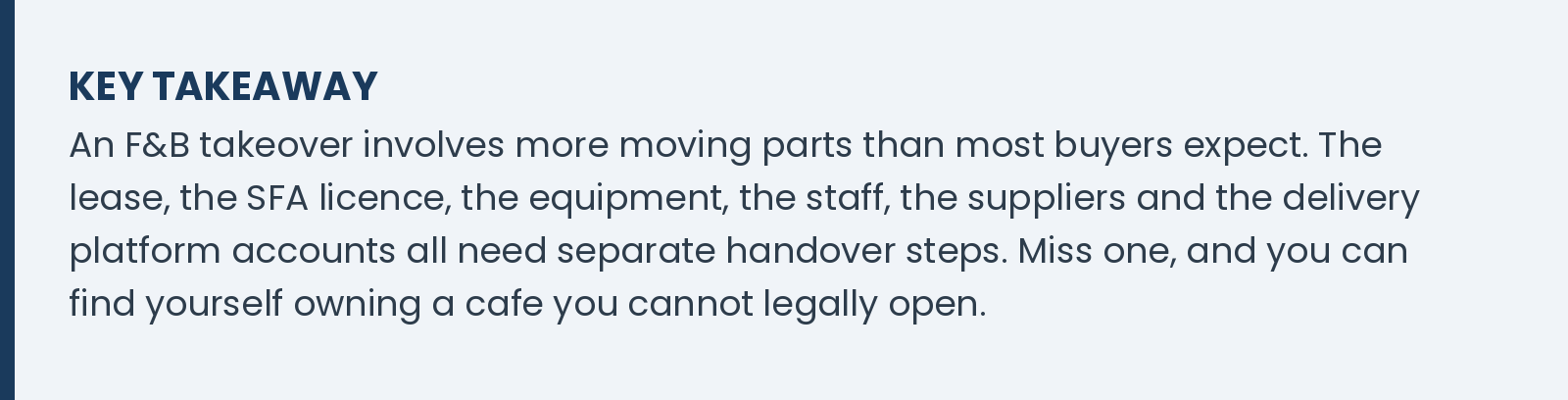
An F&B business takeover in Singapore involves more handover steps than most buyers expect. Beyond agreeing the price, you need landlord consent for the lease assignment, a fresh SFA licence in your own name, an equipment inspection, a staff transition plan and a supplier-by-supplier handover. This checklist covers every step from signed agreement to first day of trading.
The takeover agreement is the easy part. The twelve steps after it are where deals fall apart.
Before you sign
1. Confirm landlord consent in writing
Most F&B units sit inside coffeeshops, food courts or commercial buildings where the landlord or operator must approve the incoming tenant. A signed takeover agreement between you and the seller is worthless if the landlord refuses the assignment. Get the landlord's written confirmation before you pay a deposit, not after.
2. Check the remaining tenancy
Read the tenancy agreement yourself. Confirm the remaining term, the renewal option (if any), the current rent, and whether the next review resets to market rate. A short remaining term with no renewal changes the economics of the entire deal.
3. Verify the financials
Ask for at least three months of POS reports, bank statements and, if available, IRAS filings. Reconcile them against the monthly net profit the seller quoted. Cash-heavy stalls with no records are asking you to take the numbers on trust. Price accordingly.
4. Inspect every piece of equipment
Walk the kitchen and front of house with a checklist. Note the brand, age and condition of every chiller, freezer, exhaust hood, gas system, wok station, display counter and POS terminal. Ask for purchase dates and servicing records. Confirm whether each item is owned outright or on a rental or leasing contract, because leased equipment does not transfer with the sale.
Between signing and handover
5. Apply for your SFA food shop licence
The existing SFA licence does not travel with the premises. You apply in your own name through the GoBusiness Licensing portal, and you cannot start trading until the licence is approved. Factor in the processing time and start the application as early as the lease assignment allows. Any outstanding hygiene grading issue or rectification order on the premises becomes your problem once you take over.
6. Settle the staff plan
Under the Employment Act, employees who transfer with a business keep their continuous service and accrued entitlements, including annual leave and notice periods. Agree with the seller before handover which staff are staying, confirm their terms in writing, and inform them of the change of employer. Unclear staffing arrangements at handover create costs that surface weeks later.
7. Map the supplier accounts
List every supplier: ingredients, packaging, cleaning, linen, gas, waste collection. For each one, confirm whether the account transfers, whether there are outstanding balances, and whether credit terms carry over or reset. Some suppliers extend credit based on the relationship with the outgoing owner, not the business itself, so expect to renegotiate.
8. Transfer the delivery-platform accounts
GrabFood, foodpanda and any other delivery listings carry ratings, reviews and order history that have real value. Confirm with each platform whether the account can be transferred or whether a new registration is needed. A new account with zero reviews starts from scratch, which affects revenue in the first weeks.
For the broader picture on how deals are structured and priced in Singapore, see selling a business in Singapore the right way.
8a. Switch the utilities and insurance
Electricity, water and gas accounts need to be transferred or opened in your company's name before day one. SP Group handles residential and commercial utilities, and the process takes a few working days. If the premises has a grease trap or exhaust system, confirm the servicing contract transfers or arrange a new one. Commercial property insurance and public liability cover should be in place by handover, not arranged afterwards.
On handover day
9. Do the stock count
Stock is usually counted and paid for separately on the day, at cost price rather than retail. Walk the storeroom and the chillers together, agree the count, and sign it. Disputes over a S$3,000 stock bill can stall a handover that took weeks to arrange.
10. Collect every key, code and login
Premises keys, alarm codes, safe combinations, POS system logins, Wi-Fi credentials, the utility account details, the waste-collection schedule, the NEA trade effluent licence number if applicable. Write them down during the handover, not after the seller has left.
11. Photograph everything
Take dated photos of the premises, the equipment and the condition of every surface before you start trading. If a dispute arises later about what was included or what state things were in, timestamped photos settle it faster than memory.
12. Confirm the handover list is signed
A signed handover list covering every item included in the takeover fee protects both sides. List the equipment, the deposit amounts, the stock payment, and any items the seller is removing. Verbal inclusions have a habit of disappearing between the viewing and the handover.
When you are ready to compare opportunities, you can browse F&B listings on SG Business Mart and test each one against this checklist. Every listing connects you directly with the owner, with no broker in between.

What most buyers forget
The checklist above covers the mechanics. Two softer items trip up more first-time F&B buyers than any paperwork.
The first is the recipe and process handover. If the stall or restaurant has signature dishes, agree in writing how the recipe transfers. Some sellers walk out with the recipe in their head and leave the buyer with a kitchen full of equipment and no way to replicate the menu that built the customer base.
The second is the transition period. A week of the seller working alongside you during the handover, introducing suppliers, showing the daily routine, and handling any customer questions about the change of ownership, is worth more than most buyers realise. Negotiate it before you sign, because it is much harder to arrange after the seller has moved on.
Frequently asked questions
What is included in an F&B business takeover?
A typical F&B takeover includes the remaining lease or tenancy, the kitchen and front-of-house equipment, the fit-out, any transferable deposits, and goodwill such as delivery-platform accounts and supplier relationships. Stock is usually counted and paid for separately on handover day.
Do I need a new SFA licence after a takeover?
Yes. The Singapore Food Agency food shop licence does not transfer with the premises. The incoming operator must apply in their own name before trading, and any outstanding hygiene issues or rectification orders become the new operator's responsibility.
Can the landlord block a takeover?
Yes. Most commercial tenancies in Singapore require the landlord's or coffeeshop operator's written consent to assign the lease. Confirm consent in writing before you pay anything, because a signed takeover agreement is worthless if the landlord refuses the assignment.
How long does an F&B takeover take in Singapore?
A straightforward handover with a willing landlord and clean records can close in two to four weeks. SFA licence processing, landlord approvals, and tenancy paperwork are the usual bottlenecks. Build the licence lead time into your timeline.
What should I check about the equipment before paying?
Inspect every major item in person. Check the age, condition, and servicing history of chillers, freezers, exhaust hoods, and gas systems. Confirm whether each item is owned outright or on a rental or leasing contract, because leased equipment does not transfer with the sale.
What happens to staff when an F&B business changes hands?
Under the Employment Act, employees who transfer with a business retain their continuous service and accrued entitlements. Agree with the seller before handover which staff are staying, confirm their terms in writing, and inform them of the change of employer.

